• Welcome to your new Gnomio site

    Now, you are in control!

    Moodle is an open-source Learning Management System (LMS) that provides educators with the tools and features to create and manage online courses. It allows educators to organize course materials, create quizzes and assignments, host discussion forums, and track student progress. Moodle is highly flexible and can be customized to meet the specific needs of different institutions and learning environments.

    Moodle supports both synchronous and asynchronous learning environments, enabling educators to host live webinars, video conferences, and chat sessions, as well as providing a variety of tools that support self-paced learning, including videos, interactive quizzes, and discussion forums. The platform also integrates with other tools and systems, such as Google Apps and plagiarism detection software, to provide a seamless learning experience.

    Moodle is widely used in educational institutions, including universities, K-12 schools, and corporate training programs. It is well-suited to online and blended learning environments and distance education programs. Additionally, Moodle's accessibility features make it a popular choice for learners with disabilities, ensuring that courses are inclusive and accessible to all learners.

    The Moodle community is an active group of users, developers, and educators who contribute to the platform's development and improvement. The community provides support, resources, and documentation for users, as well as a forum for sharing ideas and best practices. Moodle releases regular updates and improvements, ensuring that the platform remains up-to-date with the latest technologies and best practices.

    Links of interest:

    (You can edit or remove this text)

Available courses

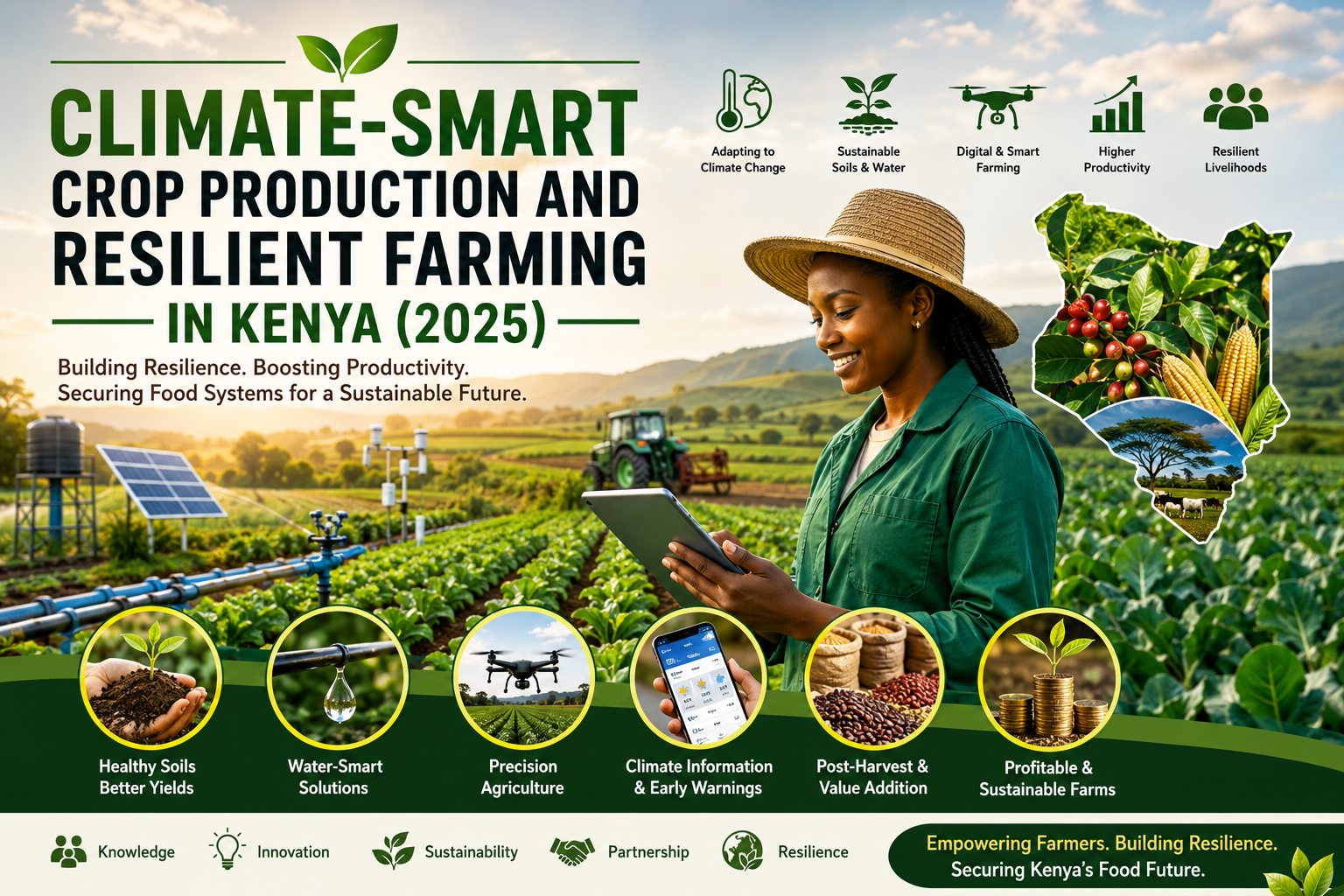
Kenya's agricultural sector is facing unprecedented challenges arising from climate change, including prolonged droughts, erratic rainfall patterns, floods, declining soil fertility, emerging pests and diseases, and increasing pressure on natural resources. At the same time, the demand for food, nutrition, employment, and sustainable livelihoods continues to grow due to rapid population growth and urbanization.

This comprehensive course equips learners with the knowledge, practical skills, and innovative technologies required to build climate-resilient and productive crop production systems in Kenya. It integrates the latest developments in climate-smart agriculture (CSA), regenerative agriculture, precision farming, digital agriculture, sustainable resource management, and agribusiness development.

The course explores how farmers, extension officers, agripreneurs, policymakers, and development practitioners can adapt to climate variability while increasing productivity, improving profitability, conserving natural resources, and contributing to national food security goals.

Participants will gain practical experience in selecting climate-resilient crops, improving soil health, conserving water resources, managing pests and diseases sustainably, utilizing digital decision-support tools, accessing agricultural markets, and developing climate-smart farm business plans.

The course aligns with:

  • Kenya Vision 2030
  • Agricultural Sector Transformation and Growth Strategy (ASTGS)
  • Kenya Climate Smart Agriculture Strategy
  • Bottom-Up Economic Transformation Agenda (BETA)
  • National Climate Change Action Plan
  • Sustainable Development Goals (SDGs)
  • Current 2025 global and regional trends in climate-smart and regenerative agriculture

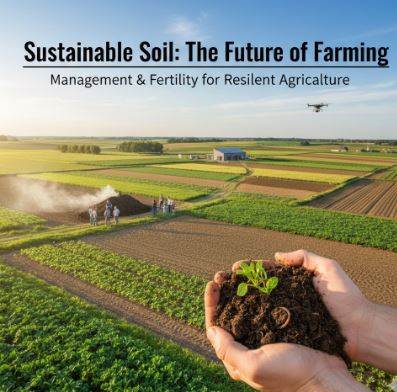
This course unit provides technical training on sustainable soil management and fertility enhancement practices essential for productive and resilient agriculture. Learners will explore soil fundamentals, nutrient management, organic and inorganic fertility strategies, conservation techniques, and practical soil health assessment methods. The content is designed for agricultural students, extension workers, and smallholder farmers, emphasizing climate-smart and regenerative approaches to combat soil degradation.